'India should stop claiming that a united Pakistan is in India's interests.' 'Pakistan's break-up is a necessity for peace and progress in the region,' says Major General Mrinal Suman (retd).

Summary of sports events and persons who made news on Friday

Domestically, China's 'strike hard' policy is alienating Uighurs further in Xinjiang. China's quid pro quo with the Taliban is hardly any lasting solution to the Afghanistan crises or to regional security, says Srikanth Kondapalli.

'If ever India loses its patience after repeated terror attacks and decides to retaliate against the terrorist camps, Pakistan may term that a conventional military attack and invoke the nuclear option. This is a way to continue with terrorism without retaliation.'
Khardah is no ordinary constituency. It is the electoral battleground of two economists-turned-finance ministers.

India has said it is committed to implementing the highest safety standards at its nuclear power plants as it seeks to harness the benefits of atomic energy to meet its growing energy requirements.
'The cooperation of Yakub with the investigating agencies after he was picked up informally in Kathmandu and his role in persuading some other members of the family to come out of Pakistan and surrender constitute, in my view, a strong mitigating circumstance to be taken into consideration while considering whether the death penalty should be implemented,' B Raman had written in August 2007.
Former Jammu and Kashmir Chief Minister Omar Abdullah on Saturday sought to link the spate of terror attacks in Sopore area with Defence Minister Manohar Parrikar's alleged remark about revival of 'Ikhwanis', an outfit of reformed militants in the state.
'Forget about sending in troops or raining down missiles, but don't rule out occasional covert operations that target specific terrorist leaders.'

The Simulia madrassa, on the outskirts of Bardhaman town in West Bengal, allegedly had links with Gulshana Bibi and Amina Bibi, the women arrested after the October 2 blast in the town. The NIA alleges the madrassa trained poor Muslim women in jihad. The madrassa had an unwritten convention: The women trained there would be married only to men who were on the same 'mission.'
We should be prepared for a phase of increased tensions in India-Pakistan relationship thanks to the evolving situation in Afghanistan, says Shyam Saran.
Through its early days to the 1980s, Pakistan sought to expand its sphere of Islamic influence through Afghanistan to Central Asia and got Pakistani citizens recruited in the Afghan government institutions in the 1990s when the Taliban were power. Now, it is looking eastward through India to Bangladesh and Myanmar to establish an imaginary caliphate.
'Koi Sardar hai? Goli se maar dalenge...' 'The only sardars who were spared in the train were the six with us. And the credit goes to the innate goodness of the passengers in our coach.' Payal Singh Mohanka remembers that horrifying train journey in the aftermath of Indira Gandhi's assassination.
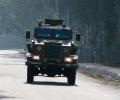
'The devious minds across the border will test us to the hilt, but in the course of that will offer us opportunities for which we must be prepared,' says Lieutenant General Syed Ata Hasnain (retd), who commanded the Uri Brigade, the Baramulla Division and the Srinagar-based Chinar Corps.
.jpg)
Throughout a quarter century of proxy war, India has shown tremendous restraint in the face of grave provocation. It is inconceivable that any other nation would have refrained from launching trans-LoC operations to eliminate terrorist training camps and interdict known routes of infiltration, says Brigadier Gurmeet Kanwal (retd).
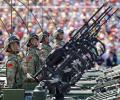
'Whether it is the One Belt One Road project or building relationships in the Indian Ocean Region -- supposedly our area of concern -- the Chinese are seriously outpacing us,' points out Vice-Admiral Premvir Das (retd).
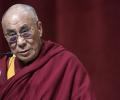
China is worried about the situation post the Dalai Lama and that his reincarnation could surface in Arunchal Pradesh, a region it claims as its own, but which is part of the Indian Republic, says former RA&W Additional Secretary Jayadeva Ranade.

'The year in pictures' treks across the globe, looking back on the moments that shaped 2016. From the United States presidential race, to demonetisation in India to the refugee crisis, the news has kept pouring in. Here are our top 50 moments from the world.
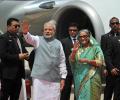
'When we have a terrorist outfit in a neighbouring nation, we need to do whatever we can to neutralise that threat,' says Ramananda Sengupta.

India can stay relevant in Afghanistan not by being a bystander but by actively bolstering anti-Taliban forces monetarily, militarily and politically, say Lt Gen R K Sawhney and Sushant Sareen

Here's the full text of Prime Minister Narendra Modi's address to the United States Congress.

'This has to be seen in the context not only of the legacy we inherited, but also of global economic weakness.'
'If after inheriting the very bad situation we have reached this level despite consecutive years of drought and no growth in the world economy, it is no accident.' 'It is a result of the sound macro economic policies followed by this government.' 'We have eschewed populism and stuck to a path of fiscal prudence.'
Sanjeev Nayar offers some ideas on how Indians can help in improving the lives of those living in border areas and in the process help the Indian Army.

Two years into power, there is very little to show for the Modi government by way of 'achievements' on the foreign policy front, and his China, Pakistan policies are gasping for breath, says Ambassador M K Bhadrakumar.
India on Wednesday hit out at China for demanding "solid evidence" for getting Jaish-e-Mohammed chief Masood Azhar banned by the United Nations

'Checkmating India by its nukes, Pakistan can pursue terrorism against India in the Kashmir Valley and also resume launching Mumbai 2008 style attacks.' 'The military oligarchy in Pakistan has a totally different view of what is desirable and possible in the subcontinent.'

If the radical Islamic movement had been largely peaceful, Headley would have probably found another way to ensure real life excitement.' 'But I really do believe that his relationship with radical Islam is real. Very real.' 'It was a match for his desires.'

'The strategy has to be restoring order in one part and countering the very effective propaganda through a very nimble monitoring and response system,' says Lieutenant General Syed Ata Hasnain, who retired as the General Officer Commanding of the Srinagar-based 15 Corps.

The Turkmenistan event underscores the lengths to which China's oil-and-gas companies will go to curry favour in resource-rich locales.

'Any Muslim who shows even the slightest hint of revolutionary thought is marked as 'infected'.' 'At that point, he is taken to the nearest Detention Centre where a procedure called Reconditioning awaits him.' 'Areas with a high Muslim population have been designated as Scheduled Religion Zones.' 'To be an active participant in this social cleansing ritual, there is only one prerequisite: You have to be an undying patriot whose friend and family is his country.'

India does not have a stringent privacy or data protection Act.

'The summer of 1857 saw violence, perpetrated by the Indians and the Britons, on an unprecedented scale.' 'Never before and never after in the history of British rule in India was there violence at the level that 1857 witnessed.'

In his last column for Rediff.com, Praful Bidwai joins issues with those lauding India's covert operation against Naga rebels based in Myanmarese territory.

A new West Asia is emerging and India must engage at the highest level and help shape this change, says Saeed Naqvi

'We have nothing to gain by helping any other country to become a threat to India,' former Sri Lanka president Mahinda Rajapaksa, who is on the comeback trail, tells Rediff.com in an exclusive interview.
'No amount of economic measures or prosperity in Kashmir will make any dent in the situation there. The average Kashmiri understands the Pakistani game and is unlikely to prefer Pakistan over India. But the Pakistanis have made clever use of religious symbols and slogans to force religious-minded Kashmiris to support them. India has failed to counter this posturing by the separatists,' says Colonel Anil A Athale (retd).

'It is a very hard won situation that the army has brought about in J&K in 25 years, we don't want to fritter it away...' 'By 2010-2012 the terrorist strength had come down to 300, 400. From a high of 3,000 to 4,000 to 300 to 400 was no mean achievement for the army,' says Lieutenant General Syed Ata Hasnain (retd).

PM Modi seems to be gradually ending India's strategic ambiguity
The Indian Army must be given a free hand to retaliate punitively at one or more places of its choosing on the LoC. The aim should be to cause maximum damage to the forward posts of the Pakistan army, particularly those through which recent attacks have been launched, thereby raising the cost for the army, says Gurmeet Kanwal.

'The US wants Modi to succeed because we want India to succeed. For our part, when India thinks of its partners in the world, we want it to think of the US first. That means positioning our country as the preferred provider of the key inputs that can help to propel India's rise.' 'The meeting between Modi and Obama is, and must be, an opportunity for true strategic dialogue -- not a scripted exchange of talking points, but an open discussion of the big questions. What kind of world do we want to live in? What are our true priorities? And most importantly, why does this partnership still matter?'
 © 2026 Rediff.com - Investor Information - Advertise with us - Disclaimer - Privacy Policy - Sitemap - Feedback - About us - Terms of use - Grievances